Organisational structure for progressive firms
Hierarchy that works on a factory floor is a poor fit for a talent-driven or founder-led firm. Structure is how growth either happens or dies.
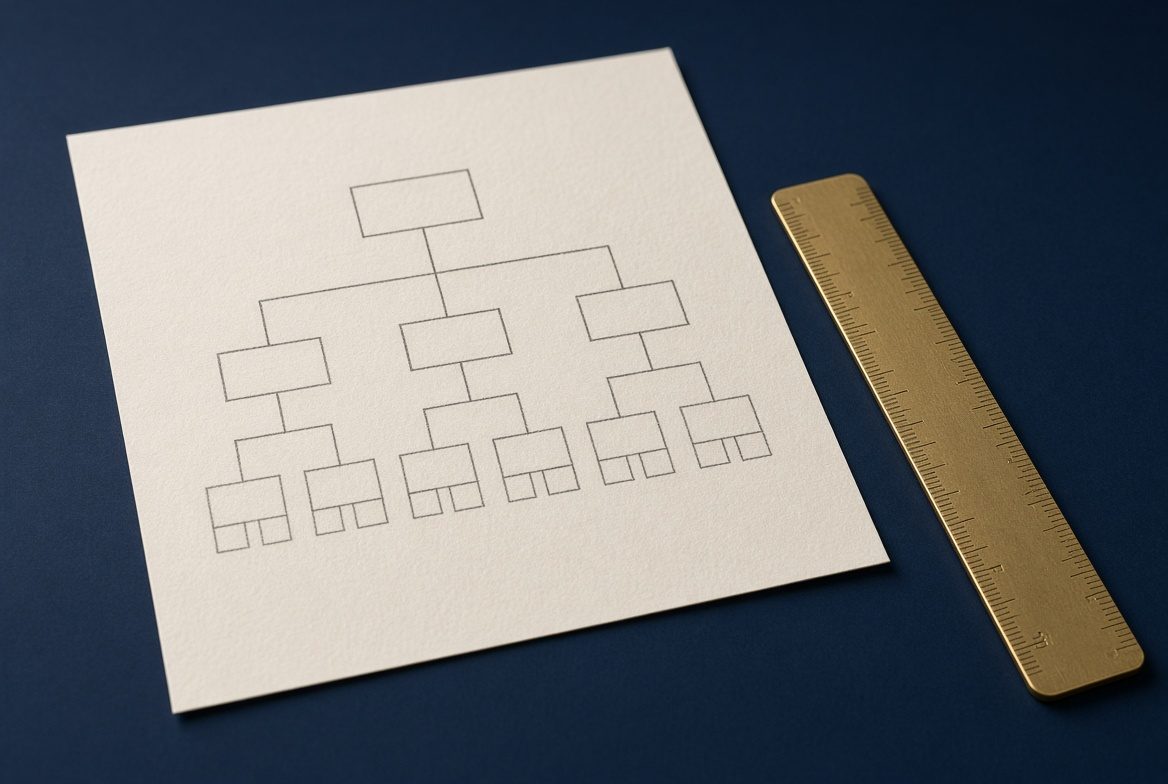
Partnerships worked because they created alignment without anyone writing it down: strong peer relationships and participatory decisions. Growth, outside capital and new ownership strain that. Firms still need the two things partnership used to give them — peers, and a say — without pretending everyone is equal or that no one is in charge.
Peers, participation, culture
Flatten the pyramid enough that the firm still feels like a partnership of peers. Participation that ignores the dark side — slow decisions, no one accountable — is not governance. Culture is not the dress code. It is the invisible guide that decides how people behave when the pack is late or a buyer is in the data room.
The cultural core in the best firms: partnership, teams, community, stars and clients held in the same hand, and perpetuity — building something that outlasts the current partners. A Chair uses organisational-structure design to make those beliefs show up in reserved matters and reporting lines, not on a values poster.
Talk to Jayesh
Jayesh P. Patel MBA FInstSMM JP · R W Progressive
Non-Executive Chair · Strategic Board Advisor · PE, sale or listing programme
j.patel@rwprogressive.co.uk · 07771 871 757
linkedin.com/in/jayesh-patel-ned